
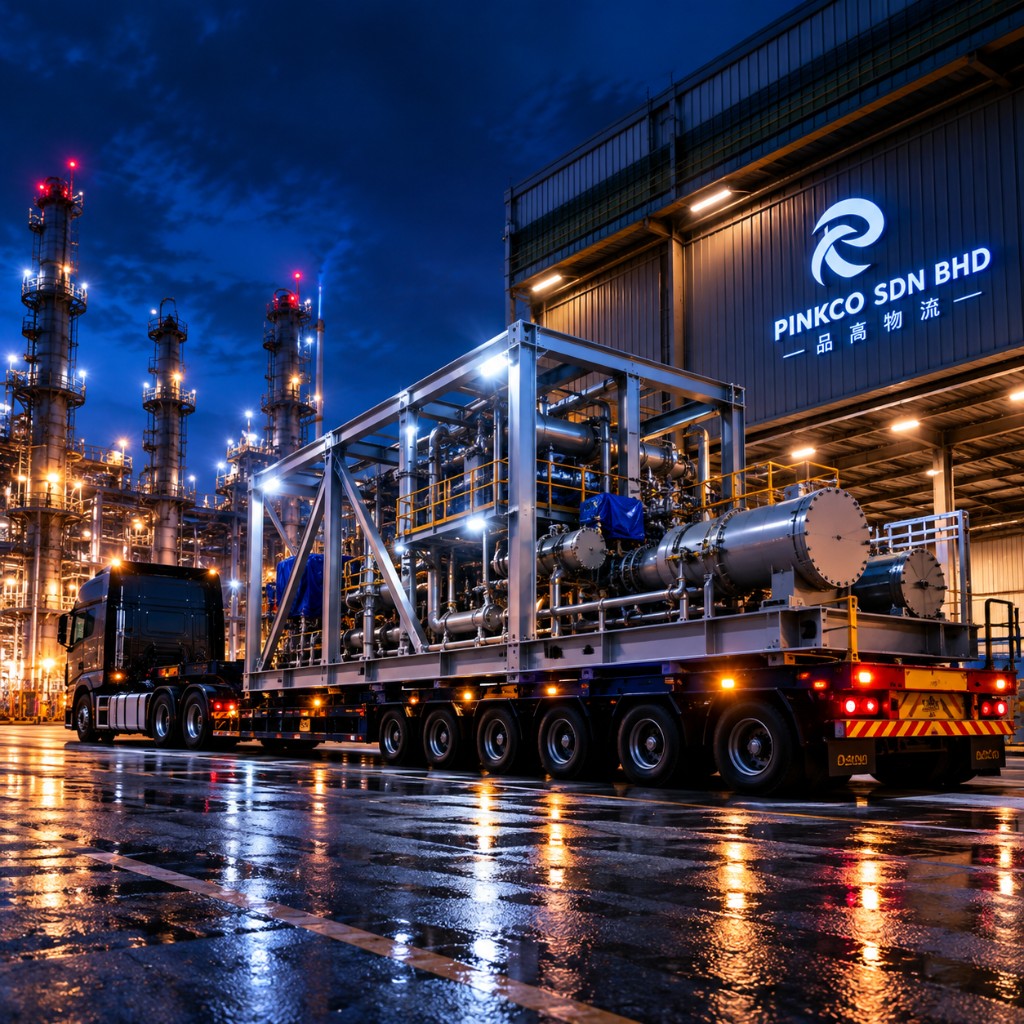
The PINKCO SDN BHD project team completed Port Klang handoff for Tengku midstream compressor-skid batches, moving cargo into bonded yard storage after discharge and releasing waves to site against the owner lift calendar. Pre-arrival centre-of-gravity and lift-point checks reduced secondary rehandling risk for heavy modular units. Documentation captured decisions for audits and owner reporting across ASEAN engineering corridors. Bonded and non-bonded inventory slots were reconciled against packing lists before gate-out to cut short-over disputes. Quality photos, serial scans and tilt indicators were archived with the batch file for insurance and warranty support.
Execution mixed RO-RO and flatbeds, night-escort segments, temporary bearing plates at plant gates, and hydraulic modular trailer turning rehearsals. The dispatch desk shared live ETA with crane contractors so drivers and lift crews arrived together. Pinkco coordinators refreshed shared milestone boards so nominated contacts could track exceptions in near real time. Escort, crane and trailer resources were pre-booked against the same calendar used by site lift supervisors. Local authority permits and community notices were closed before convoys entered residential or industrial park gates.
Compliance covered customs inspection bookings, origin and packing-declaration consistency, and segregated carriage of hazardous accessories. Owner HSE joined the inbound toolbox talk and confirmed temporary road occupation plus community notices were complete. Route, yard and customs checkpoints were reconfirmed before each wave to keep Port Klang and inland handoffs predictable. Weather and congestion advisories from the control desk fed daily toolbox talks for drivers and stevedores. The Klang HQ desk kept a single escalation path so verbal instructions could not override written method statements.
The first skids landed on plan without lashing slack or structural contact damage. Average port-to-plant cycle met the agreed SLA and abnormal documents closed before arrival. Safety stoppage thresholds for wind, visibility and traffic remained binding for every night or oversized movement. Cross-border CIQ scenarios stayed aligned with Johor Bahru and Singapore partner desks when alternate lanes were required. Steel, machinery and spare-parts waves used the same command language to reduce handoff friction between shifts.
Later waves will reuse the same playbook with monsoon weather-window buffers, continuing to support east-coast midstream energy construction cadence. Lessons from the wave were logged into the internal playbook for reuse on similar Malaysian and Singapore-border jobs. East Malaysia barge and airfreight contingencies remained visible so energy and infrastructure owners could re-sequence work.